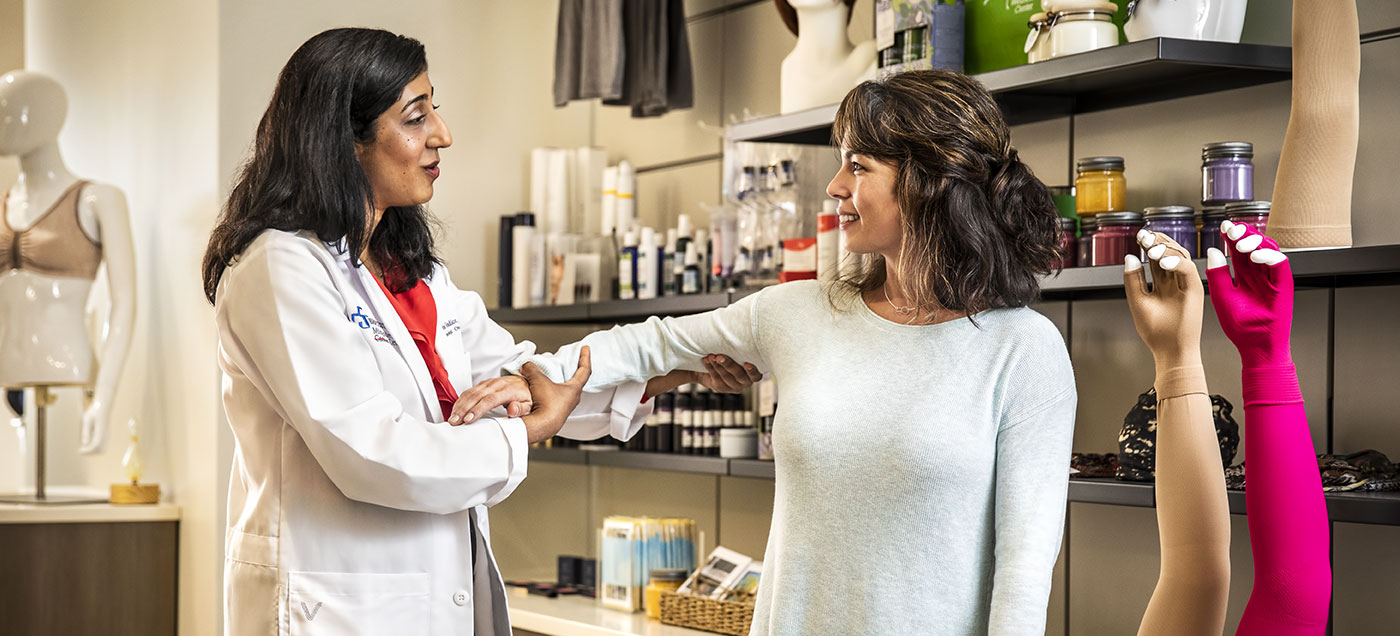
The physical therapist will evaluate you and create a treatment plan. It may include one or more
of the following:
Skin care
Avoid injury and infection. Practice good hygiene, and put on moisturizing
lotion. We will teach you how to care for your skin.
Massage
Two basic types of massage are used to treat lymphedema:
Manual lymph draining is a precise and gentle form of massage that helps move the fluid to other parts of the body.
Soft tissue mobilization (or myofascial release) is a type of massage used to loosen scar tissue and other tightness that might contribute to the swelling. Sometimes massage is taught to patients or family members to do at home.
Exercise
You may be referred to Baptist MD Anderson’s Rehabilitation Services. They
can teach you how to do stretching exercises to loosen up the tissues in the area or special
exercises to help move the fluid. You will get written instructions for these exercises.
Bandaging
Cotton, low-stretch bandages apply constant pressure on the limb.
Bandaging is usually combined with other methods of treatment.
Compression garments
Elastic fabric garments, similar to a girdle or support stocking,
put pressure on the arm or leg to help move fluid and keep new fluid from collecting.
Medicine
Sometimes doctors prescribe antibiotics or other medicines as part of the
treatment plan.
Surgery
For many patients, surgery may help treat lymphedema.